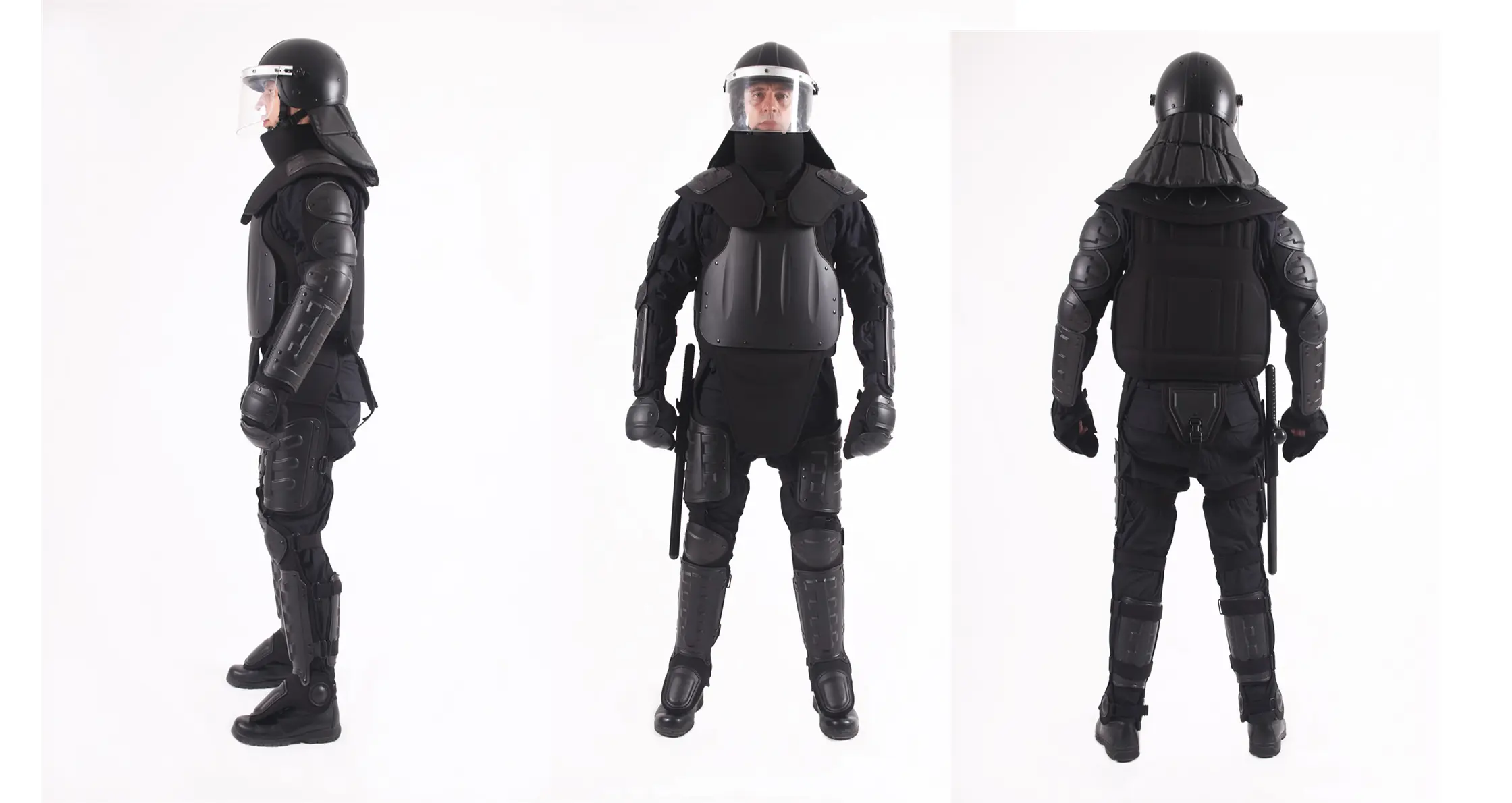
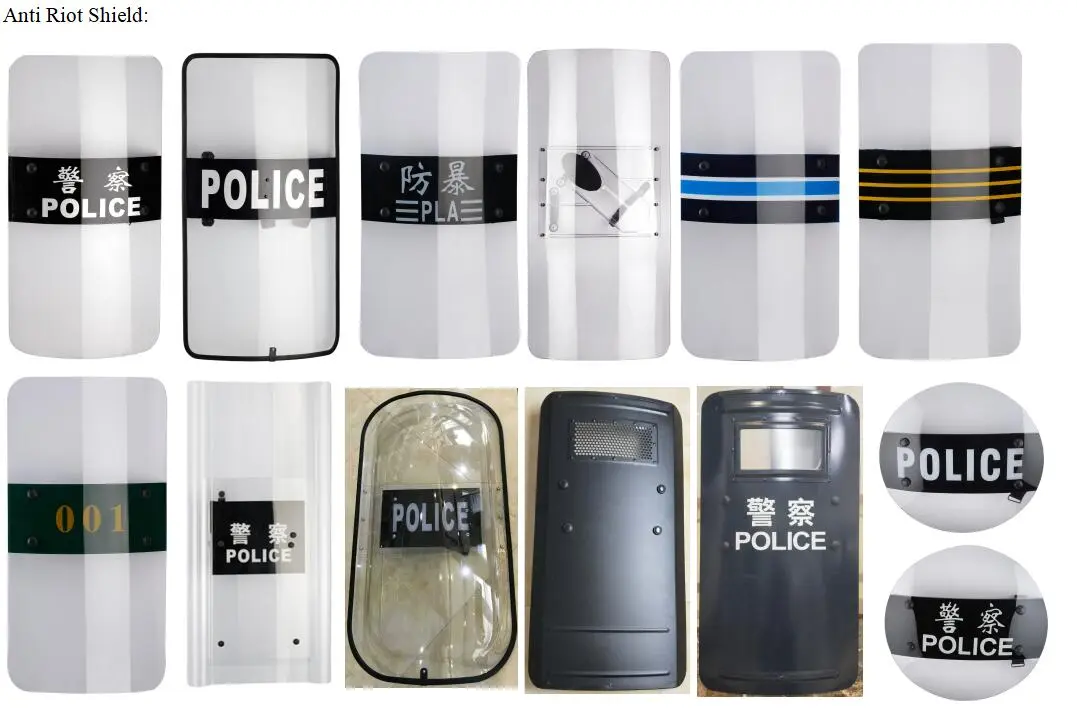
2026 How to Choose the Right Riot Helmet for Your Safety Needs?
Choosing the right riot helmet can be critical for safety. In recent years, the demand for effective protective gear has surged. According to industry reports, the global riot helmet market is expected to grow by 7% annually until 2026. This highlights the need for reliable options.
A quality riot helmet not only protects the head from impact but also ensures visibility. Features such as face shields and ventilation can enhance wearer comfort. However, many individuals overlook essential aspects when selecting a helmet. The wrong choice could lead to serious injuries.
It's vital to analyze available options carefully. Some helmets may meet basic safety standards but lack advanced protective features. A helmet that fits poorly can compromise safety. Reflection on personal needs, such as environments and potential risks, can guide better decisions. Making an informed choice is key to personal safety in challenging situations.
Understanding the Importance of Riot Helmets for Personal Safety
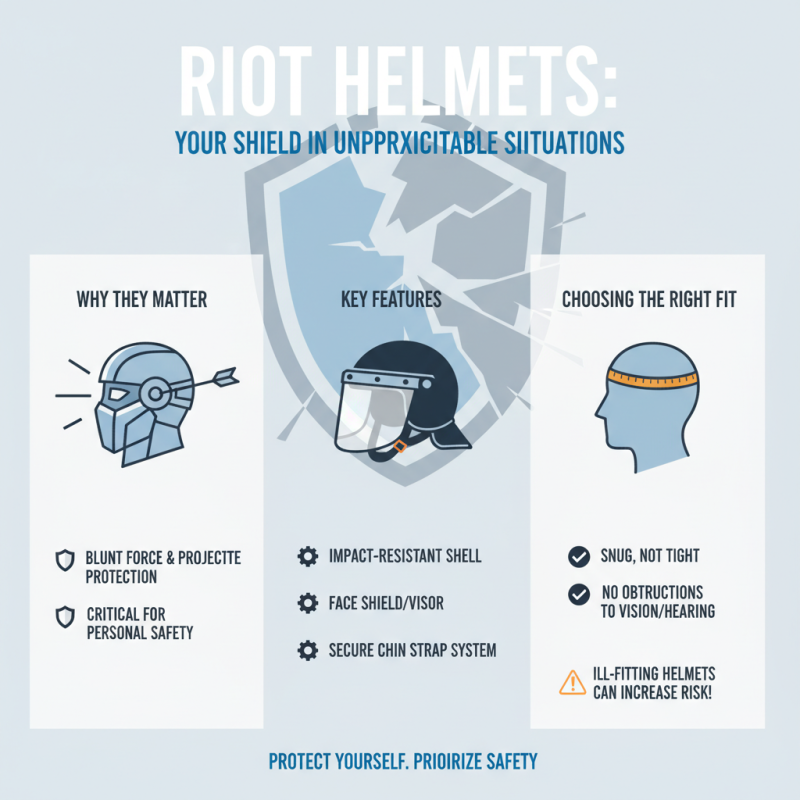
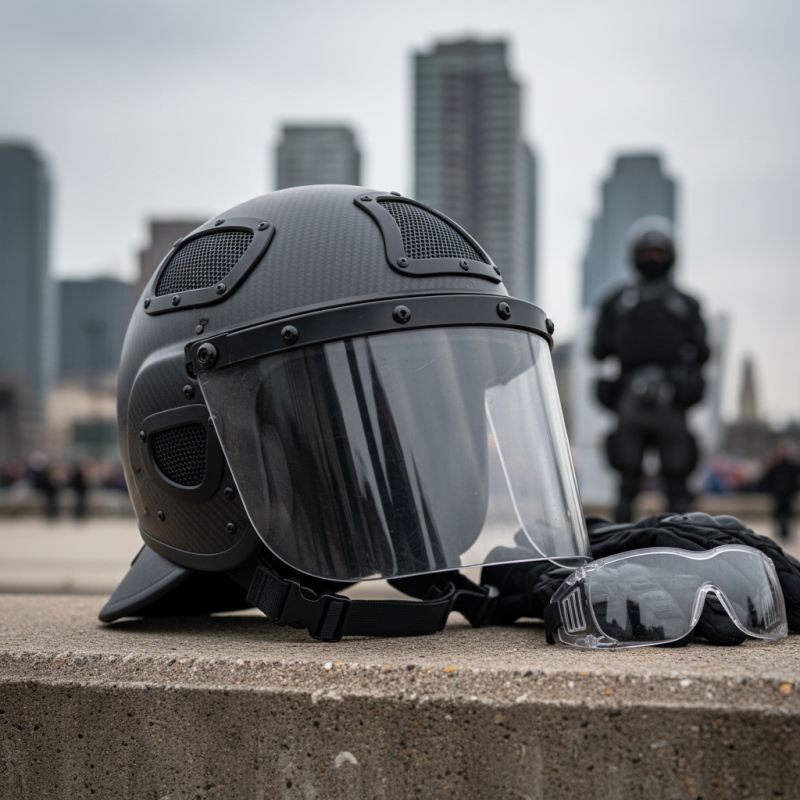
Riot helmets play a crucial role in personal safety during chaotic situations. They are designed to protect the head from blunt forces and projectiles. When choosing the right helmet, consider factors beyond just appearance. The fit is essential. An ill-fitting helmet can cause distractions or fail to provide adequate protection.
Tips: Check the sizing guide before purchasing. Measure your head to find the perfect fit. Comfort is key. You will wear this helmet for extended periods. Look for interior padding that feels soft yet secure. Ventilation matters, too. Proper airflow can prevent overheating in stressful environments.
Additionally, evaluate the visor options. Some helmets have a full-face shield, while others may offer a flip-up shield. Each has its advantages. A clear view is vital when navigating through difficult situations. This adds to the overall safety experience.
Remember, it’s not just about looks or brand. Scratches or dents on a helmet can weaken its structure. Inspect your helmet regularly for damage. It’s worth the effort to ensure your safety.
Types of Riot Helmets: Features and Specifications to Consider
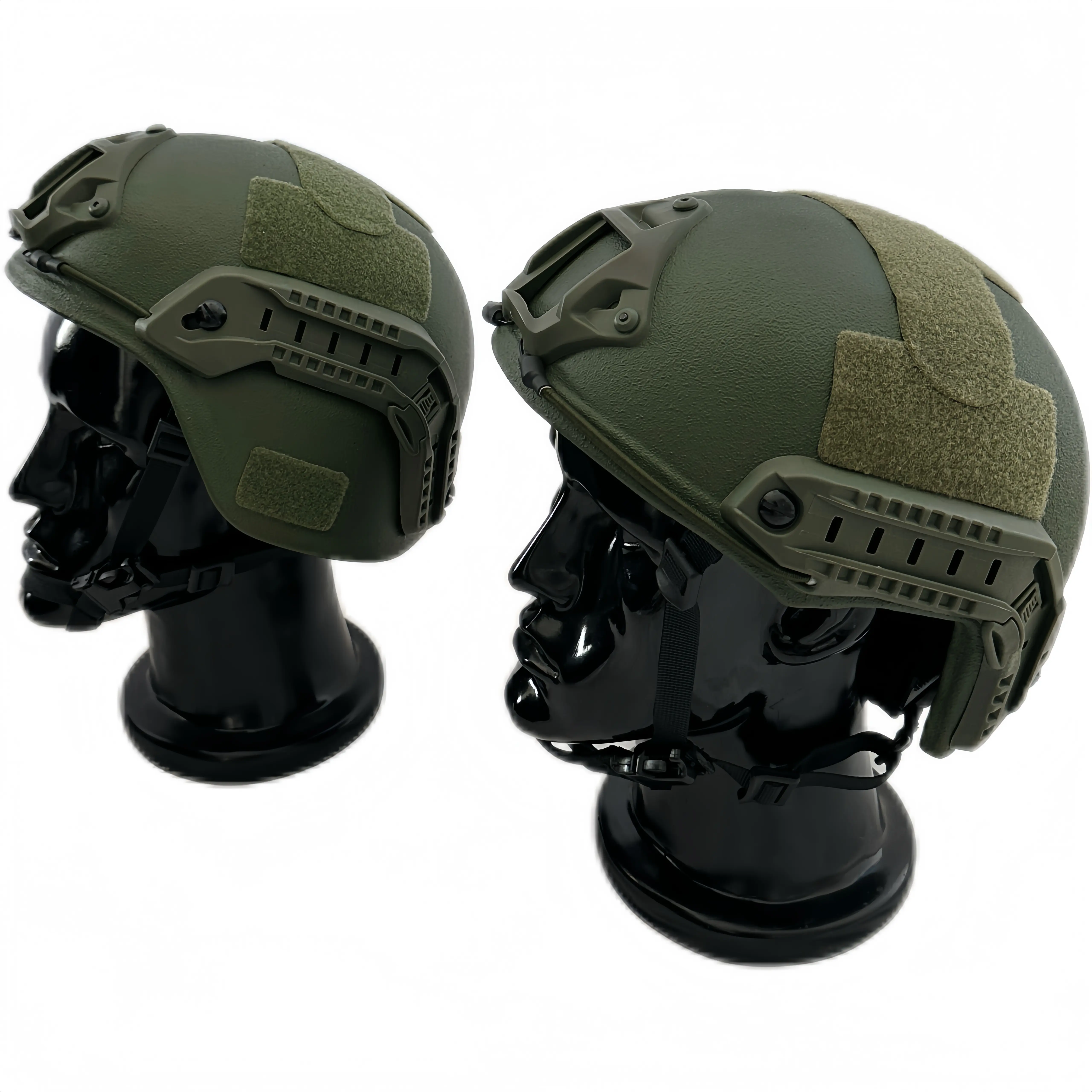
When selecting a riot helmet, understanding the types available is essential. Riot helmets vary in design, materials, and safety features. Common types include full-face helmets and those with visors. Many helmets are made from polycarbonate, offering solid impact resistance. According to recent industry reports, helmets using high-density materials can withstand impacts of up to 150 joules.
Features should be carefully examined. Look for adjustable straps for better fitting. Additionally, ventilation is crucial to prevent overheating. Studies show that effective ventilation can increase comfort by 30% during prolonged use. Many helmets incorporate built-in communication devices, enhancing coordination during emergencies. Reality suggests that features like these are often overlooked until they’re needed.
Specifications matter as well. Weight affects mobility. Heavier helmets can be a burden during extended wear. Compliance with safety standards is non-negotiable. A minimum standard is often set at EN 397 or equivalent. However, not all helmets meet these standards consistently. Buyers should verify certifications before making a purchase. It's easy to assume all helmets offer the same level of protection, but that's not the case.
2026 How to Choose the Right Riot Helmet for Your Safety Needs?
Evaluating Fit and Comfort: Ensuring Proper Helmet Wear
Choosing the right riot helmet is crucial for safety. Comfort and fit are key factors. A helmet that doesn't fit well may not protect you properly. Testing the helmet before purchase is important. Adjust the straps to get a snug fit. Make sure there’s no wobbling. Your head should feel secure.
Tips for Fit: Measure your head accurately. Use a soft measuring tape for best results. Compare it with helmet sizing charts. Wear the helmet for a few minutes. Is it heavy? Does it cause discomfort? Feeling pressure points? These are signs you may need a different size.
Assess the padding inside the helmet. It should be thick enough but not overly bulky. Breathable materials can help keep you cool. Look for adjustable liners. They offer additional customization. A helmet that feels good can make a big difference during stressful situations. If it’s too tight or too loose, reconsider your options. Your safety depends on it.
2026 How to Choose the Right Riot Helmet for Your Safety Needs? - Evaluating Fit and Comfort: Ensuring Proper Helmet Wear
| Dimension |
Measurement |
Description |
| Head Circumference |
20.5 - 24 inches |
Measure around the widest part of the head. |
| Weight |
1.5 - 3 lbs |
Consider lighter helmets for prolonged use. |
| Materials |
Polycarbonate, fiberglass |
Choose durable and impact-resistant materials. |
| Padding Thickness |
0.5 - 1.5 inches |
Adequate padding for comfort and protection. |
| Ventilation |
Number of vents varies |
Important for breathability during events. |
Material and Durability: Choosing the Right Construction for Use
When choosing a riot helmet, material and durability are key factors. A helmet must withstand harsh conditions. Common materials include polycarbonate and fiberglass. Polycarbonate is lightweight but might crack under extreme impacts. Fiberglass is stronger but heavier. The right choice depends on your specific needs.
For optimal protection, consider helmets with multiple layers. These often provide better impact resistance. Look for features that enhance comfort, like padding or ventilation. Too tight or too loose can be problematic. Test the fit before making a decision.
Tips: Always check for certifications. This ensures the helmet meets safety standards. Don't forget about weight. A heavier helmet can be tiring over time. Reflect on your situation. Will you face prolonged wear? Your choice should balance protection and comfort.
Additional Safety Features: Enhancing Protection in Riot Situations
When selecting the right riot helmet, focus on additional safety features. Enhanced protection can make a difference in critical situations. For instance, look for helmets with reinforced shells. Materials like polycarbonate or fiberglass provide better durability. Comfort is also vital. Padding should be adjustable and breathable.
Consider visibility features too. A clear visor can prevent visibility loss in chaotic environments. Anti-fog and scratch-resistant coatings improve usability. Some helmets can also integrate communication systems. This ensures you stay connected with your team.
Test different options to find what fits comfortably. A helmet should not hinder your movements. Straps must secure it tightly without causing discomfort. Reflect on past experiences. Did your gear perform as expected? Prioritizing these features will enhance safety in unpredictable scenarios. Choose wisely; your protection depends on it.